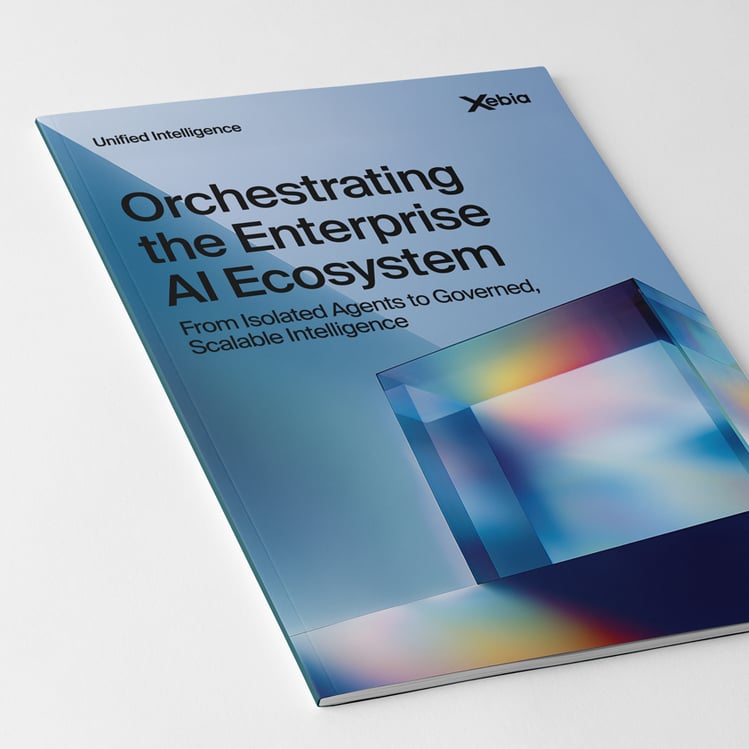
Many organizations are rapidly deploying AI copilots, assistants, and automation across different platforms. While these initiatives deliver value individually, they often create a fragmented AI landscape with disconnected agents, inconsistent governance, and limited oversight.
This whitepaper explains how organizations can move from scattered AI experimentation to a unified enterprise intelligence layer powered by agentic orchestration.
What You’ll Learn in This Whitepaper
This whitepaper explains how enterprises can design a secure and scalable AI orchestration architecture. Inside the whitepaper:
1. The enterprise AI orchestration model
How organizations move from isolated copilots to a coordinated AI ecosystem.
2. Agentic orchestration explained
How LLMs detect intent, plan actions, and coordinate specialized agents to execute tasks across systems.
3. Governance and security foundations
How to enforce:
• role-based access control
• secure identity propagation
• audit trails and observability
• least-privilege agent identities
4. Designing future-proof AI architectures
How to build flexible orchestration layers that adapt to evolving protocols like MCP and A2A.
Why Enterprise AI Needs Orchestration
The challenge: AI fragmentation at scale
Enterprise AI adoption typically begins with momentum:- copilots embedded in productivity tools
- conversational assistants in HR, IT, and customer operations
- LLM-powered automation across workflows
Over time, organizations accumulate dozens of AI agents operating in different systems, each with their own rules, identities, and governance boundaries. This leads to fragmentation across user experience, security, and accountability.
Without orchestration, enterprise AI becomes a collection of isolated experiments rather than a strategic operating model.
What Is Unified Intelligence?
The missing layer in enterprise AI architecture
Unified Intelligence is the coordination layer that connects and governs AI capabilities across the enterprise. Instead of deploying more standalone agents, organizations introduce an orchestration layer that:- interprets user intent
- coordinates specialized AI agents
- routes tasks across enterprise systems
- enforces identity and permissions
- ensures observability and compliance
The result is not simply more AI — but structured, governed intelligence operating across the organization.
Real Enterprise Scenario
What this looks like in practice
In many organizations, employees spend significant time navigating different enterprise systems. For example:- HR requests live in one platform
- IT issues in another
- ERP approvals somewhere else
- policies scattered across knowledge bases
Instead of forcing employees to navigate these systems, organizations can introduce a unified conversational interface integrated into collaboration tools like Microsoft Teams.
Behind the scenes:- the system detects the user’s intent
- the orchestration layer routes the request
- specialized agents execute the task
- identity and permissions are enforced
- all actions are logged and traceable
From the user perspective, the experience is seamless. From the enterprise perspective, it remains fully governed and secure.
Key Questions for AI Leadership
As agentic AI adoption grows, leadership teams should be able to answer questions like:- How many AI agents exist across our organization today?
- How do these agents collaborate across systems?
- Can we trace AI-driven actions end-to-end?
- Is identity consistently propagated across systems?
- Are permissions evaluated dynamically and contextually?
- Do we have monitoring, guardrails, and rollback mechanisms?
If these questions are difficult to answer, orchestration becomes the next strategic step.
Download the Whitepaper
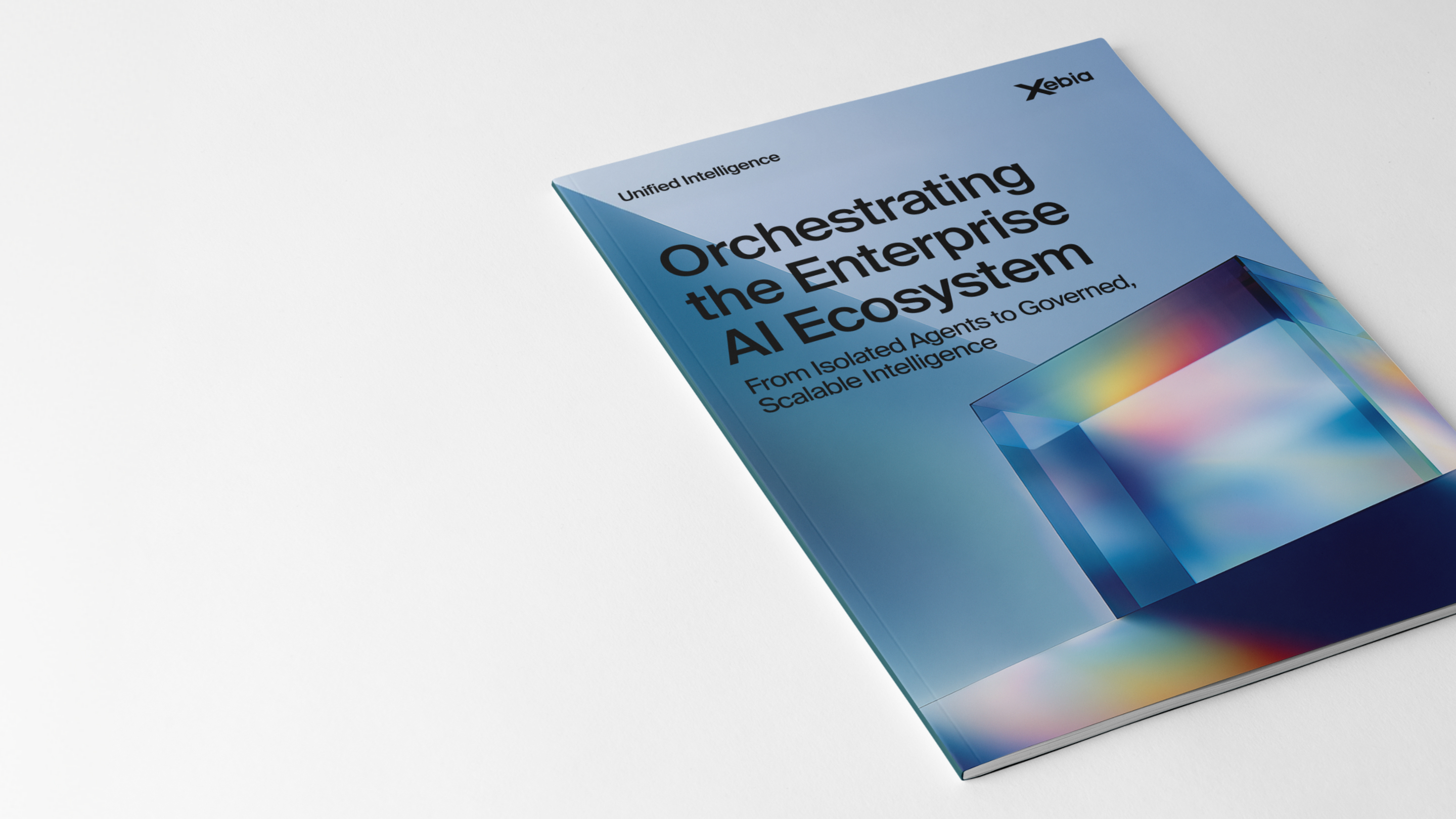
Orchestrating the Enterprise AI Ecosystem
Learn how to build a governed, scalable AI operating model that connects copilots, agents, and enterprise systems into one coordinated intelligence layer.
Whitepaper highlights:- Enterprise AI orchestration architecture
- Governance frameworks for agentic systems
- Identity and security patterns for AI agents
- Real-world enterprise scenarios