
Insurance has moved past the question of whether AI matters.
-
62% of insurance companies rate their AI maturity as scaling across functions
-
52% of insurance companies report revenue growth from AI
-
24% are fully confident in their AI controls
Source: Grant Thornton, 2026
The real question is how to run it across underwriting, claims, distribution, servicing, and risk without losing control of decisions that touch customers, capital, and regulators.
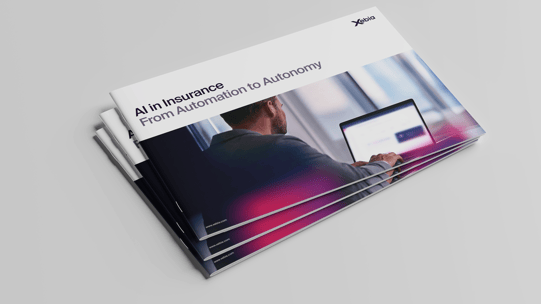
This whitepaper lays out the shift from isolated automation and copilots to governed, agentic AI: systems that reason across information, coordinate tasks, use enterprise tools and act within defined limits. It maps where AI creates value across the insurance chain, a graduated model for how much autonomy to hand over and when, the architecture that keeps intelligence and control separate, and the governance insurers need as regulation gets more specific.
It closes with a 90-day path from pilot to production and the business metrics that show whether AI is actually changing the way you work, not just how many pilots you have running.
What You Will Learn
-
Where AI creates the most value today across underwriting, claims, servicing, distribution, and risk
-
A four-level model for how much autonomy to give AI, from assist to bounded execution
-
The architecture that separates agent intelligence from enterprise control, and why that separation matters
-
Six controls to build into your AI systems from day one, mapped to NAIC and NIST requirements
-
A 90-day plan for taking one workflow from pilot to controlled production
-
The metrics that show whether AI is changing your business, not just running more pilots
Why does this matter for Insurance Companies?
Insurance runs on documents, decisions, hand-offs and rules, which makes it one of the industries best suited to agentic AI. Rising claims costs, harder-to-scale expert judgment and higher customer expectations are pushing insurers past pilots into real operating models. Winners repeatedly move a use case into controlled production, prove the outcome and reuse what worked for the next one.
Who should download this Whitepaper?
These assets are for insurance leaders who own an AI, data or digital transformation agenda and need a practical path from pilots to production, not a general AI primer.
Connect with our Insurance Experts